





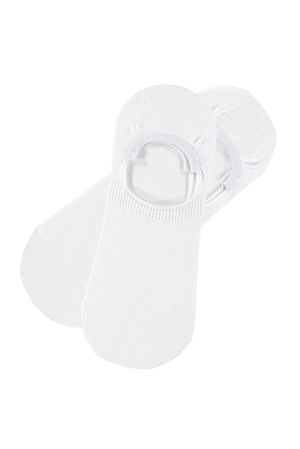


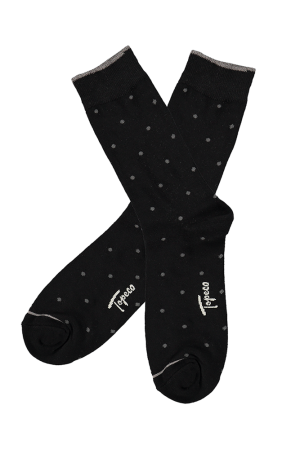




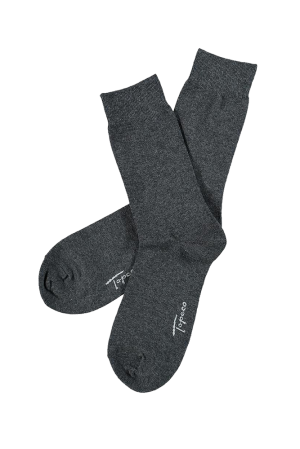
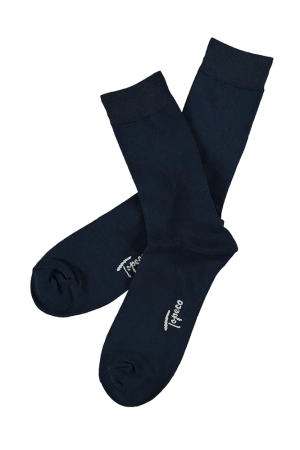
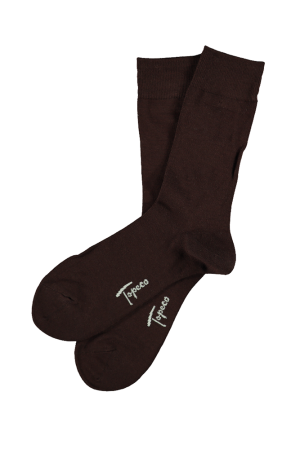
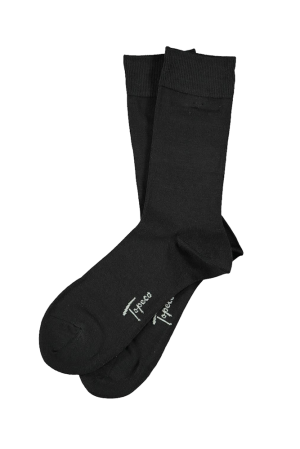
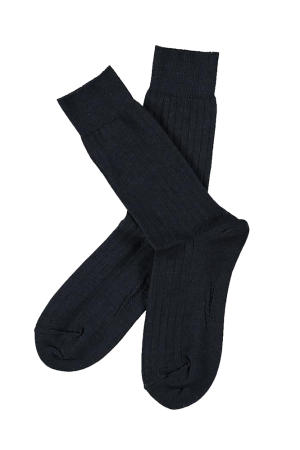
One of the most important deciding factors in what pair of socks to buy or put on is that of fabric. Socks come in different fabrics and blends which determine how they fit, wear and look. Still today, cotton or cotton blends remain the undisputed kings in fabrics used for socks.
Cotton & Cotton Blend Socks
Cotton socks are so ideal for both daily and active wear because of the fabric’s many positive properties. One of them is cotton’s breathability due to the natural fibre’s structure, which is hollow and thereby facilitates the absorption of moisture. This reduces sweaty feet and, importantly, the creation of bacteria, fungus and other nasties that make a man’s feet stink or more. It also reduces the probability of developing blisters.
One cannot overestimate the importance of ‘breathable’ socks. Consider the fact that feet have among the highest concentrations of sweat glands on the entire human body, no less than 250 to 600 glands per square centimetre. That’s a lot of sweat potential! An allied feature of cotton is that of temperature regulation, which means cotton doesn’t easily overheat, which is not the case with most synthetics, such as polyester. Those fabrics can overheat horribly!
Moisture absorption is another terrific feature of cotton socks, due to the fabric’s excellent moisture-wicking abilities and which is how the fabric repels moisture. This further prevents feet from getting sweaty. Amazingly, cotton can absorb up to 27 times its weight in water before feeling damp, so little wonder it’s one of the leading reasons for cotton’s continued popularity for men’s socks. There are synthetic fibres that also have good moisture-wicking properties but they tend to wane over time because the chemicals in them start to deteriorate.
Cotton is also hypoallergenic, which is good for men who may have skin that is sensitive to irritation. Rashes, such as contact dermatitis, are not something one associates with cotton. It’s also a durable fabric, meaning it can be washed numerous times without losing its shape or softness. That is clearly ideal for an often-worn garment such as a pair of socks.
Cotton blends are exactly what the name suggests – they’re a blend of cotton and synthetic fabrics. So-called cotton-rich blends are especially good for socks that require some elasticity whilst keeping their shape. Many athletic socks are made from cotton blends but so too are ordinary socks worn by men worldwide for daily use. A good rule of thumb in the market is that any socks with more than 60% cotton are considered to be ‘cotton rich’.
Other Fabrics for Socks
Socks can of course be made from other fabrics, with wool being an obvious choice for men needing thicker socks in cold weather. Nothing quite beats thick woollen socks on a cold winter’s night! Not all woollen socks are very thick or coarsely-textured, with thinner wools still being a great option for autumn and less frigid winter days.
Bamboo or, more specifically, viscose bamboo has become a very popular fabric for garments, including socks. Bamboo socks can be an excellent choice, given that like cotton they are also breathable, moisture-wicking and hypoallergenic. They thermoregulate very well, meaning they can be cool for summer and warm during winter. Because viscose bamboo requires heavy processing, including the use of chemicals, it’s considered to be a synthetic fabric. However, wearers of bamboo socks allay any fears of the tearing and sagging that occurs with many synthetics, with assurances that socks from bamboo continue to wear well and keep their shape after multiple washes.
How Does One Choose the Right Socks?
The question of which socks to wear when is not as straightforward as it appears. Like so much in fashion, is has a lot to do with a man’s taste, personal style and lifestyle. One thing is imperative, though: you must choose socks that ultimately reflect you and your personal style, whatever that might be.
Stay Mono: Many men play it safe by opting for plain or monochromatic socks, be they socks in any shade of blue, different shades of grey or a host of other colours and tones. It’s perfectly understandable why a ‘safe’ choice can be the best choice. For one thing, the choice of monochromatic socks in darker tones for autumn or winter or lighter tones for warmer weather is so widespread as to be staggering! For another, a pair of socks in plain black or navy blue are always versatile and can be easily worn with a number of different outfits in different colours. For example, a pair of classic black cotton socks can be worn as well with a pair of dark blue jeans as a casual suit in a light wool or heavy cotton.
Go Eclectic: However, since the 2000s and especially now in the 2020s, there has been a proliferation of multicoloured socks in just about any colour combination and pattern choice imaginable. The great thing about a pair of brightly coloured or patterned socks is that they can allow you to make a subtle statement. A brightly-coloured or boldly-patterned tie will always attract attention, but bright or bold socks are a little less obvious. They only reveal themselves when a trouser lifts when walking or when a man is seated, sometimes just slightly peeking out like a game of hide-and-seek!
Wearing a pair of socks in bright colours or a bold design can give a gentleman a little thrill, knowing that only the attentive (or the interested, perhaps?) will notice them. Non-monochromatic socks can also be a sneaky, fun way of pairing your socks with a tie or even bowtie in a similar colour or tone.
There are some half-decent rules of thumb when it comes to wearing what shade of socks with what shade of pants. If the pants are a dark shade, then socks can be matched to the pants being worn or even darker; so, black socks can be worn with dark brown pants. If the pants are lighter-toned, then the best bet is to match the colour of the socks with the colour or tone of shoes being worn. This is known as tone-on-tone colour matching and can be as easy to follow with darker suits or pants and corresponding socks. Some stylists urge men to always have socks in black, dark or navy blue and dark tones of grey in their sock drawer, given their versatility, particularly in autumn and winter.
A gentleman’s sock drawer can be a treasure trove of garments in varying fabrics, colours and patterns, each pair waiting for their opportunity to shine through in both form and function.